|
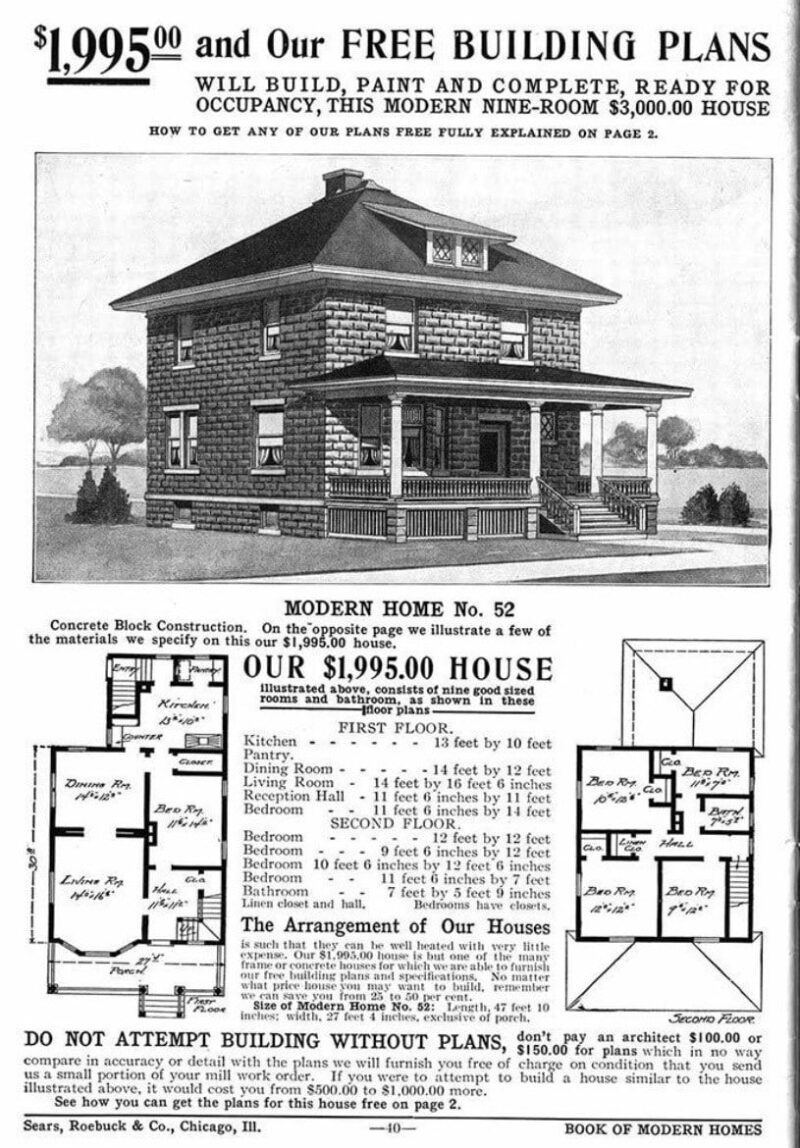
Online companies like Amazon have made it possible to ship pretty much anything you can imagine to your front door. We think we’re pretty progressive, ordering everything from office supplies to camping gear delivered to our doorstep. You might be surprised to know, however, that years ago, your grandparents could have an entire house delivered by mail! It may be hard to believe now, but a century ago, Sears, Roebuck & Company helped build neighborhoods all over the USA. Pre-designed home packages were an easy way for middle class people to realize their dreams of home ownership. Purchased by catalog, would-be homeowners received materials shipped by railroad cars to be assembled in as little as 90 days by their builder.Including such time-saving materials as factory pre-milled lumber, Sears affordable “home kits,” kick-started the American Dream for thousands. With over 400 styles in a range of budgets, the mail-order homes proved to be a massive hit. Between 1908 and 1949, 75,000 Sears homes were built across the USA. In 1939, Sears sold around $7 million in kit homes. By 1940, the Modern Homes Department employed 120 salespeople working from 16 district sales offices. By 1942, preparations for World War II ended the enterprise. Today, home builders purchase readily available, high quality materials from their local lumber suppliers. Subject to energy and life-safety codes, homes today have indoor plumbing, electrical, and technological systems that builders of yesteryear couldn’t have imagined. Foundations and roof systems are designed specific to the location by licensed engineers. Climate control is a matter of adjusting the settings on your iPad. A luxury home in Steamboat Springs can easily take 18 months to build. In spite of the advancements in construction, in spite of the comfort of new homes, sometimes we long for the simple life of the past! Home Pricing Today USA Median 2021 home price (unadjusted): $346,900 Median 1940 home price (unadjusted): $2,938 Of course, in Steamboat Springs, the median home is much higher-end than in the rest of the country, and as well, factors such as deep frost, heavy snow loads, and expansive soils contribute to higher construction costs. However, while the pandemic shortages of supplies and labor pushed up the cost of building, costs for the upcoming years appear to be stabilizing. While it is unlikely that we will see any price drops, we also do not expect a repeat of the drastic rises that can be attributed to the adopted energy code changes and price increases during the height of the pandemic. |